
Exterior Superyacht Design: Setting New Standards in Luxury
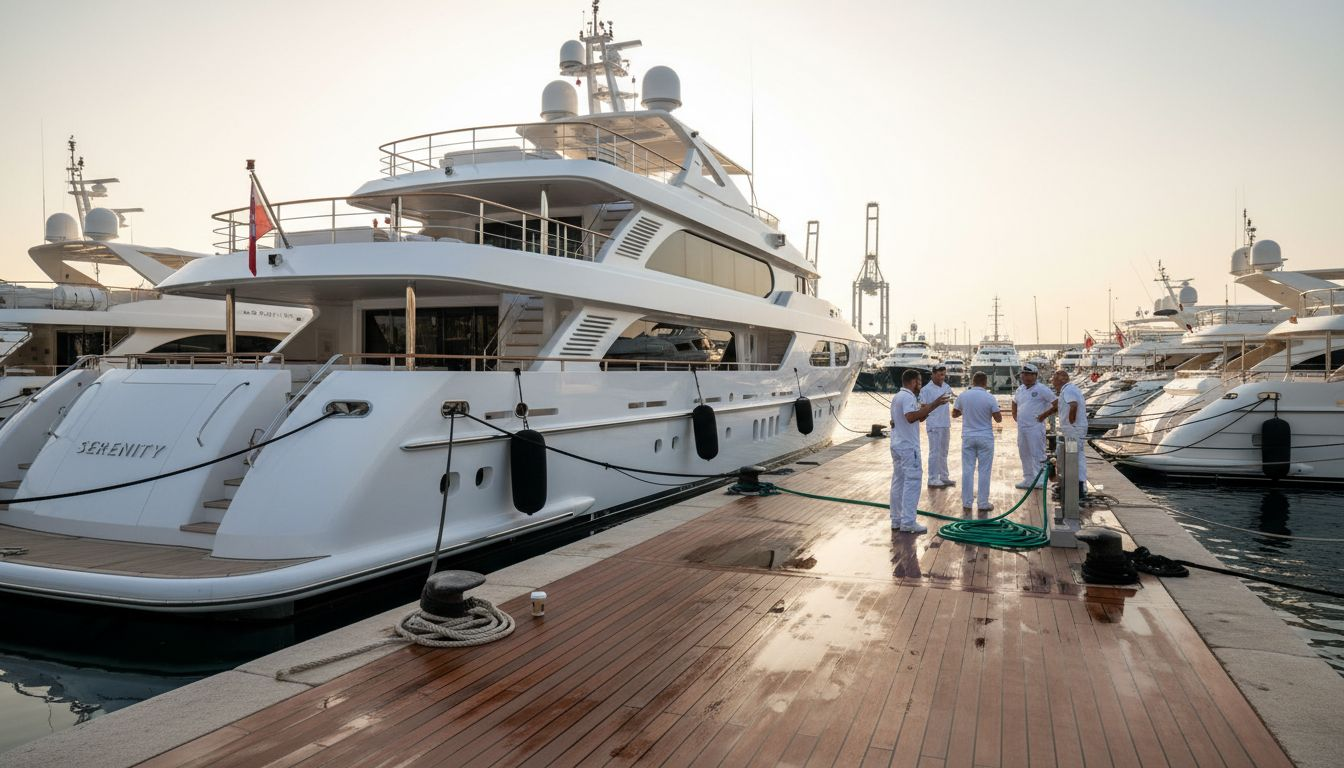
Over 80 percent of new superyacht commissions now demand advanced exterior features that rival top American innovations in luxury and technology. For high-net-worth individuals and elite builders, every detail of exterior superyacht design influences prestige, onboard experience, and long-term value. This guide reveals the most groundbreaking approaches, signature styles, and critical design strategies shaping bespoke superyacht exteriors for those who expect nothing less than leadership in maritime excellence.
Table of Contents
Key Takeaways
Point | Details |
Importance of Multidisciplinary Collaboration | Successful superyacht exterior design requires collaboration among naval architects, marine engineers, and designers to balance aesthetics and performance. |
Focus on Sustainability | Modern designs should prioritize sustainability through lightweight materials and energy-efficient technologies. |
Customization and Innovation | Bespoke features and innovative solutions are key to creating unique superyachts tailored to individual owner preferences. |
Risk Management Essentials | Effective project management must include a thorough understanding of potential risks such as budget overruns and regulatory compliance challenges. |
Defining Exterior Superyacht Design and Purpose
A superyacht represents the pinnacle of maritime luxury and engineering excellence, defined as a professionally crewed pleasure vessel spanning remarkable lengths from 40 to over 180 meters. These extraordinary vessels transcend traditional boat design, embodying an intricate fusion of aesthetic sophistication, technological innovation, and personalized functionality.
Exterior superyacht design serves multiple strategic purposes beyond mere visual appeal. Each exterior element is meticulously engineered to balance performance, comfort, and aesthetic elegance. Naval architects focus on creating exterior profiles that communicate prestige while ensuring optimal hydrodynamic efficiency. Key design considerations include hull shape, structural integrity, deck configuration, and technological integration that enables seamless maritime experiences for discerning owners.
The exterior design process involves complex interdisciplinary collaboration between naval architects, marine engineers, and industrial designers. Sophisticated computer modeling and advanced computational fluid dynamics allow designers to simulate and optimize vessel performance under diverse maritime conditions. These sophisticated tools enable precise refinement of exterior elements like hull lines, superstructure geometry, and propulsion system integration, ensuring each superyacht achieves peak operational excellence.
Modern exterior superyacht design increasingly emphasizes sustainability and environmental responsibility. Designers now incorporate lightweight materials, aerodynamic profiles, and energy-efficient technologies that minimize ecological impact while maintaining luxurious standards. Custom yacht design principles have evolved to create vessels that represent not just personal statements of wealth, but also progressive engineering achievements.
Pro Tip: When commissioning a superyacht exterior design, prioritize designers who demonstrate comprehensive understanding of both aesthetic innovation and technical performance capabilities.
Types and Styles of Exterior Superyacht Designs
Exterior superyacht designs represent a sophisticated spectrum of architectural expressions, ranging from classic elegance to cutting-edge contemporary aesthetics. These maritime masterpieces are categorized into distinct styles that reflect both technological innovation and owner preferences. Modern yacht styling has evolved to encompass multiple design philosophies that push the boundaries of maritime engineering.
The primary exterior design categories include explorer yachts, classic displacement vessels, performance sporty designs, and transformative expedition models. Explorer yachts feature robust hulls with enhanced structural integrity, designed for long-range maritime journeys across challenging global environments. Classic displacement models emphasize traditional nautical lines with graceful, timeless silhouettes that communicate understated luxury. Performance designs prioritize sleek, aerodynamic profiles that maximize speed and maneuverability, often incorporating lightweight materials and aggressive geometric forms.
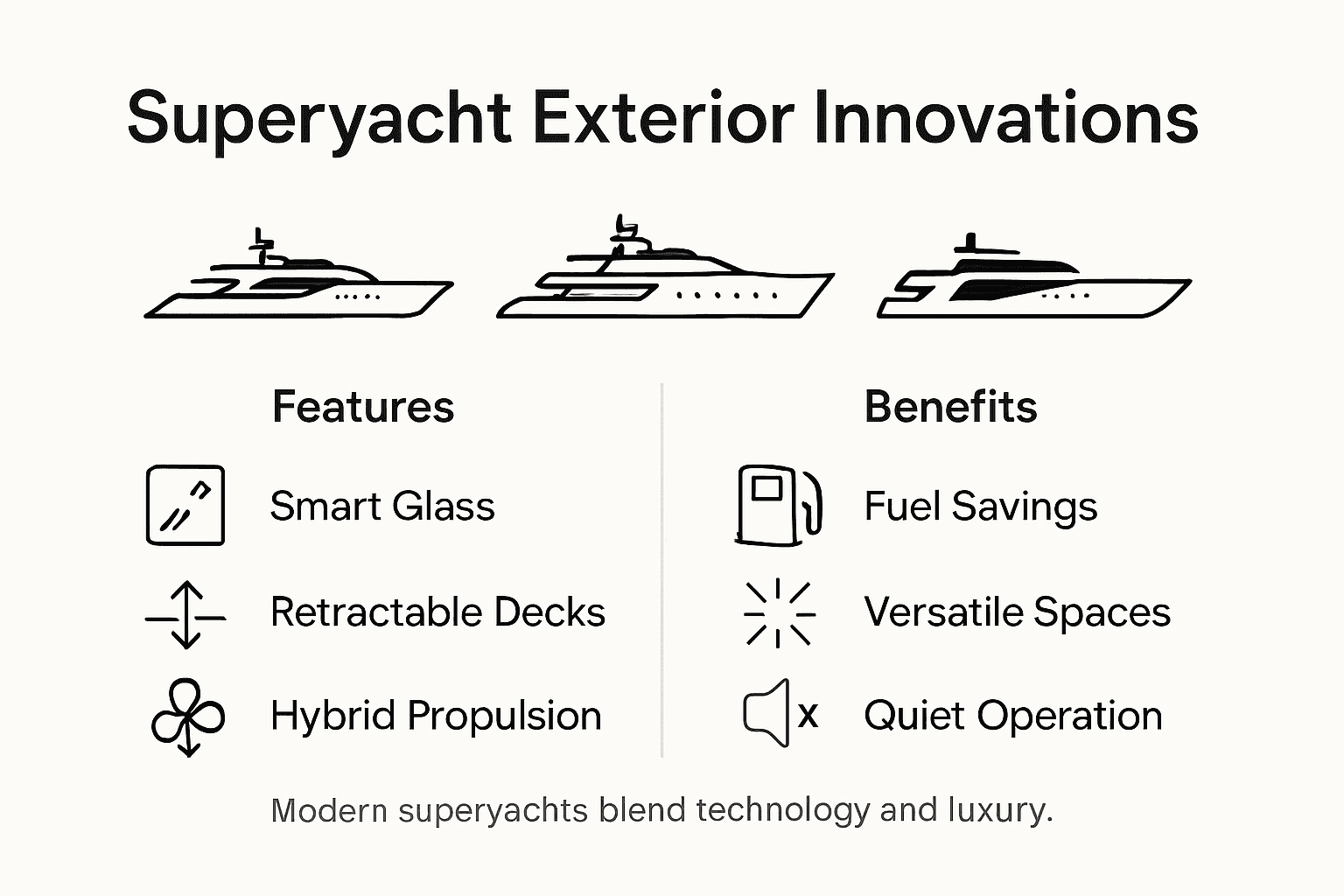
Contemporary exterior superyacht design increasingly integrates advanced technological features that transform vessel functionality. Innovative elements like retractable terraces, multi-level deck configurations, and adaptive exterior spaces allow unprecedented customization. Designers now incorporate sophisticated glass engineering, modular architectural components, and dynamic exterior surfaces that can transform based on environmental conditions or owner preferences.
Technological advancement has dramatically expanded exterior design possibilities, enabling unprecedented levels of personalization. Carbon fiber construction, adaptive hull designs, and computer-aided optimization tools allow naval architects to create vessels that are not just transportation platforms, but complex, adaptable maritime environments. Each exterior design now represents a unique statement of technological capability, personal aesthetic, and maritime performance potential.
Here is a comparison of the main superyacht exterior design categories and their defining characteristics:
Design Category | Key Features | Typical Purpose |
Explorer Yachts | Robust hull, long-range capability | Expedition in challenging waters |
Classic Displacement | Traditional lines, timeless silhouette | Elegant cruising and luxury |
Performance Sporty | Sleek, aerodynamic, lightweight materials | High speed and dynamic appearance |
Expedition Models | Adaptable spaces, advanced systems | Versatility for global exploration |
Pro Tip: When exploring superyacht exterior designs, prioritize architects who demonstrate a holistic approach integrating technological innovation, aesthetic sophistication, and performance engineering.
Innovative Features and Bespoke Solutions
Superyacht exterior design now represents a revolutionary fusion of technological innovation and personalized craftsmanship. Bespoke yacht design solutions have transformed maritime engineering by enabling unprecedented levels of customization and functional adaptation that cater to individual owner preferences.
Innovative exterior features are increasingly defined by their multifunctionality and adaptive capabilities. Advanced design exemplars like the 45-metre SAN by Alia Yachts demonstrate cutting-edge approaches, incorporating sophisticated elements such as ergonomic bridge configurations with full-height panoramic glazing. These designs feature revolutionary components like adjustable dining tables, folding bulwarks that expand beach club areas, and retractable architectural elements that maximize spatial utility and owner comfort.
Modern superyacht exterior innovations focus on three critical dimensions: technological integration, environmental sustainability, and personalized user experience. Emerging design philosophies incorporate advanced materials like carbon composites, adaptive structural technologies, and smart glass systems that can dynamically modify transparency, thermal characteristics, and spatial configurations. Designers now utilize computational modeling and advanced simulation techniques to create exterior profiles that optimize hydrodynamic performance, reduce environmental impact, and provide unprecedented levels of customization.
The future of exterior superyacht design lies in creating holistic maritime environments that transcend traditional transportation concepts. Cutting-edge designs integrate seamless technological interfaces, adaptive architectural elements, and intelligent systems that respond to owner preferences and environmental conditions. Each exterior design becomes a complex, living ecosystem that balances aesthetic elegance, technological sophistication, and personalized functionality.
Pro Tip: When exploring bespoke superyacht exterior designs, request comprehensive 3D visualization and performance simulation models to fully understand potential design capabilities.
The Design Process: From Concept to Reality
Superyacht exterior design transforms abstract concepts into sophisticated maritime masterpieces through a meticulously structured creative workflow that integrates technological innovation and client vision. The journey from initial concept to final vessel represents a complex, multidisciplinary process that demands extraordinary precision and collaborative expertise.
Yacht design workflow principles emphasize critical considerations of balance, proportion, and hydrodynamic efficiency. The process begins with comprehensive owner consultations, where designers explore individual preferences, functional requirements, and lifestyle expectations. Naval architects then develop initial conceptual models, utilizing advanced computational tools to simulate performance characteristics, evaluating factors like weight distribution, hull geometry, and potential maritime environments.
The exterior design phase involves intricate collaboration between multiple specialized professionals, including naval architects, industrial designers, engineering specialists, and materials experts. Advanced 3D visualization technologies enable rapid prototyping and detailed performance simulations, allowing designers to test complex design hypotheses before physical construction begins. Computational modeling provides unprecedented insights into potential design configurations, helping refine exterior profiles to optimize speed, stability, fuel efficiency, and aesthetic appeal.
Modern superyacht exterior design transcends traditional engineering boundaries, integrating cutting-edge technologies like adaptive materials, smart structural systems, and environmentally responsive architectural elements. Each design iteration represents a sophisticated dialogue between technological potential, aesthetic vision, and practical maritime engineering. Designers must balance complex variables including regulatory compliance, technological feasibility, owner expectations, and emerging maritime design standards.
Pro Tip: Request comprehensive computational performance simulations and detailed 3D renderings to fully understand potential exterior design capabilities before finalizing your yacht concept.
Sustainability and Cutting-Edge Technologies
Superyacht exterior design is experiencing a revolutionary transformation, driven by an unprecedented convergence of technological innovation and environmental consciousness. Sustainable yacht design strategies are redefining maritime engineering, introducing advanced technologies that dramatically reduce ecological impact while maintaining luxury performance standards.
Emerging superyacht technology trends for 2025 showcase groundbreaking innovations in propulsion and energy management. Advanced hybrid propulsion systems, including hydrogen and methanol fuel cells, represent a significant leap in maritime sustainability. Bifacial solar panel technologies enable unprecedented energy harvesting, while AI-assisted stabilization systems proactively adapt to maritime conditions, enhancing both comfort and operational efficiency.
Cutting-edge exterior design now integrates smart technological systems that transform vessels into intelligent, adaptive maritime environments. Computational modeling and advanced materials science allow designers to create exterior profiles that dynamically respond to environmental conditions, optimizing energy consumption, hydrodynamic performance, and structural integrity. Sustainable materials like carbon composites, recycled marine-grade polymers, and advanced lightweight alloys enable designers to reduce vessel weight while maintaining structural strength and performance capabilities.
The future of superyacht exterior design represents a holistic approach to maritime engineering, where technological innovation, environmental responsibility, and luxury performance converge. Designers are developing exterior solutions that not only minimize ecological impact but also provide enhanced operational capabilities, integrating advanced sensor networks, autonomous navigation technologies, and adaptive architectural systems that transform maritime travel into a sophisticated, responsible experience.
Pro Tip: Prioritize yacht designers who demonstrate a comprehensive approach to sustainability, integrating advanced technologies with environmentally responsible engineering principles.
Costs, Risks, and Common Pitfalls to Avoid
Superyacht exterior design projects represent extraordinarily complex financial and engineering undertakings with significant potential for unexpected challenges.
stemming from intricate customization demands, technological integrations, and evolving owner specifications that can dramatically impact project timelines and financial projections.
Contractual risks associated with cutting-edge maritime technologies require meticulous legal and technical preparation. Design complexity introduces multiple potential failure points, particularly when experimental technologies like decarbonization systems are incorporated. Potential risks include unexpected material performance limitations, unproven technological capabilities, regulatory compliance challenges, and potential warranty complications that can significantly impact project feasibility and long-term vessel performance.
Financial risks in superyacht exterior design extend beyond initial construction costs, encompassing complex interdependencies between technological innovation, regulatory compliance, and ongoing maintenance requirements. Unexpected challenges can emerge from multiple domains, including international maritime regulations, environmental compliance standards, advanced material performance uncertainties, and sophisticated technological integration complexities. Owners must anticipate potential scope creep, where initial design concepts evolve dramatically during the construction process, potentially triggering substantial additional expenses.
The following table summarizes essential risks commonly encountered in superyacht exterior design projects and practical mitigation strategies:
Risk Type | Example Challenge | Mitigation Strategy |
Budget Overruns | Customized features increasing costs | Rigorous budgeting and monitoring |
Technological Uncertainty | Unproven innovations underperforming | Pilot testing and phased integration |
Regulatory Compliance | New laws impacting construction | Early legal consultation |
Material Performance | Delays from unexpected failures | Source proven, quality materials |
Successful superyacht exterior design requires a holistic risk management approach that integrates financial planning, technological expertise, legal preparedness, and adaptive design strategies. Comprehensive project planning must account for potential technological uncertainties, regulatory evolution, and the inherent complexities of creating highly customized maritime vessels that represent significant financial investments and technological achievements.
Pro Tip: Engage multiple independent expert consultants to conduct comprehensive risk assessments and provide detailed financial projections before finalizing your superyacht exterior design concept.
Elevate Your Vision for Exterior Superyacht Design with Opalinski Design House
The challenge of merging cutting-edge innovation, sustainable materials, and flawless aesthetic elegance in exterior superyacht design demands a partner with proven expertise. If you seek solutions that transcend ordinary luxury and embrace advanced engineering principles like fold-down transoms and adaptive architectural elements, discover the difference that Opalinski Design House offers. Our bespoke approach answers the critical needs highlighted in this article, from hydrodynamic efficiency to personalized multifunctional spaces, ensuring your superyacht is a masterpiece of technology and style.
Transform your dream into reality with our comprehensive innovative yacht design services. Don’t settle for conventional when you can work with the studio that pioneered industry-changing technologies like the rotational transom for vessels over 50 meters. Act now to harness sustainable yacht design strategies and luxury performance tailored specifically for you. Contact us today at Opalinski Design House and set new standards in your superyacht’s exterior design.
Frequently Asked Questions
What defines a superyacht in terms of size and purpose?
A superyacht is defined as a professionally crewed pleasure vessel typically ranging from 40 to over 180 meters in length, representing the height of luxury and engineering excellence.
How does the exterior design of a superyacht enhance performance and comfort?
The exterior design is meticulously engineered to balance aesthetics, hydrodynamic efficiency, and comfort, utilizing advanced technology and structural integrity in elements like hull shape and deck configurations.
What are the common styles of exterior superyacht designs?
Common styles include explorer yachts with robust hulls for long-range capability, classic displacement vessels with traditional lines, performance sporty designs that prioritize speed, and transformative expedition models with adaptable spaces.
How is sustainability integrated into modern superyacht exterior design?
Modern superyacht designs incorporate lightweight materials, aerodynamic profiles, and energy-efficient technologies to minimize ecological impact while maintaining high luxury standards.
Recommended
Comments