
Master Naval Architecture Process Steps for Yacht Design

Most american yacht owners expect more than just beautiful lines and powerful engines. The process of designing a custom yacht requires detailed planning, technical mastery, and careful collaboration, where even small missteps can lead to costly setbacks. With over 90 percent of clients valuing clear communication and design alignment from day one, understanding each step in the design journey ensures your vision shines through in every detail. This guide walks you through the critical phases that turn dreams into extraordinary yachts.
Table of Contents
Quick Overview
Central Takeaway | Clarification |
1. Identify client vision early | Conduct a thorough interview to capture emotional and technical aspects of the client’s desires for the yacht. |
2. Create multiple design concepts | Develop at least three sketches to give clients options and enhance visualization of different solutions. |
3. Implement advanced engineering analysis | Use computational modeling to refine designs and verify crucial performance metrics like stability and hydrodynamics. |
4. Optimize vessel performance | Conduct simulations to evaluate performance metrics, ensuring the yacht meets operational requirements under various conditions. |
5. Ensure compliance before delivery | Verify that all designs meet safety and environmental regulations through comprehensive inspections and documentation. |
Step 1: Define design requirements and client vision
Defining design requirements and capturing the client’s vision represents the foundational phase of yacht design. This crucial initial step transforms abstract dreams into a concrete blueprint for an extraordinary maritime experience.
Successful yacht design begins with comprehensive client consultation. You’ll want to conduct an in-depth interview exploring not just technical specifications, but the emotional landscape of your client’s aspirations. During this process, design requirements become a bridge between imagination and engineering precision, translating personal visions into actionable naval architectural plans.
Start by creating a structured discovery questionnaire covering key areas: intended usage, performance expectations, aesthetic preferences, and lifestyle requirements. Ask probing questions about how they envision using the yacht. Will it be for leisurely Mediterranean cruises? Adventurous ocean expeditions? High-speed racing? Understanding these nuances helps craft a design that’s not just technically sound, but personally resonant.
Pro Tip: Always document client conversations meticulously. Subtle comments can reveal design insights that technical specifications might miss.
Once you’ve gathered comprehensive input, synthesize the information into a formal design brief. This document serves as your north star throughout the entire design process, ensuring every subsequent decision aligns with the client’s original vision and functional requirements.
Step 2: Develop preliminary designs and technical concepts
In this critical phase of yacht design, you will transform client requirements into initial technical concepts and visual representations. Your goal is to create a strategic blueprint that bridges imagination with engineering precision.
Preliminary yacht design involves a sophisticated iterative process that requires both creativity and analytical rigor. Begin by developing multiple conceptual sketches exploring different hull configurations, deck layouts, and overall vessel geometries. Use sophisticated naval architecture software to rapidly evaluate technical and economic feasibility of alternative design concepts, ensuring each iteration aligns with the client’s original vision and performance requirements.
Focus on key technical parameters during this stage: hull shape, displacement, performance characteristics, and potential propulsion systems. Create computational models that simulate vessel behavior under various maritime conditions. This approach allows you to test design hypotheses without substantial physical prototyping, saving time and resources.
Pro Tip: Generate at least three distinct conceptual designs. Variety helps clients visualize potential solutions and provides flexibility in the design process.
Once you have developed initial concepts, prepare a comprehensive presentation package. Include detailed renderings, performance projections, and comparative analysis to help your client understand the nuanced trade-offs between different design approaches. This transparent communication builds trust and sets the stage for collaborative refinement.
Step 3: Refine detailed plans with engineering analysis
Engineering analysis represents the critical refinement stage where conceptual yacht designs transform from promising sketches into precision-engineered blueprints. Your objective is to validate and optimize every technical aspect of the preliminary design.
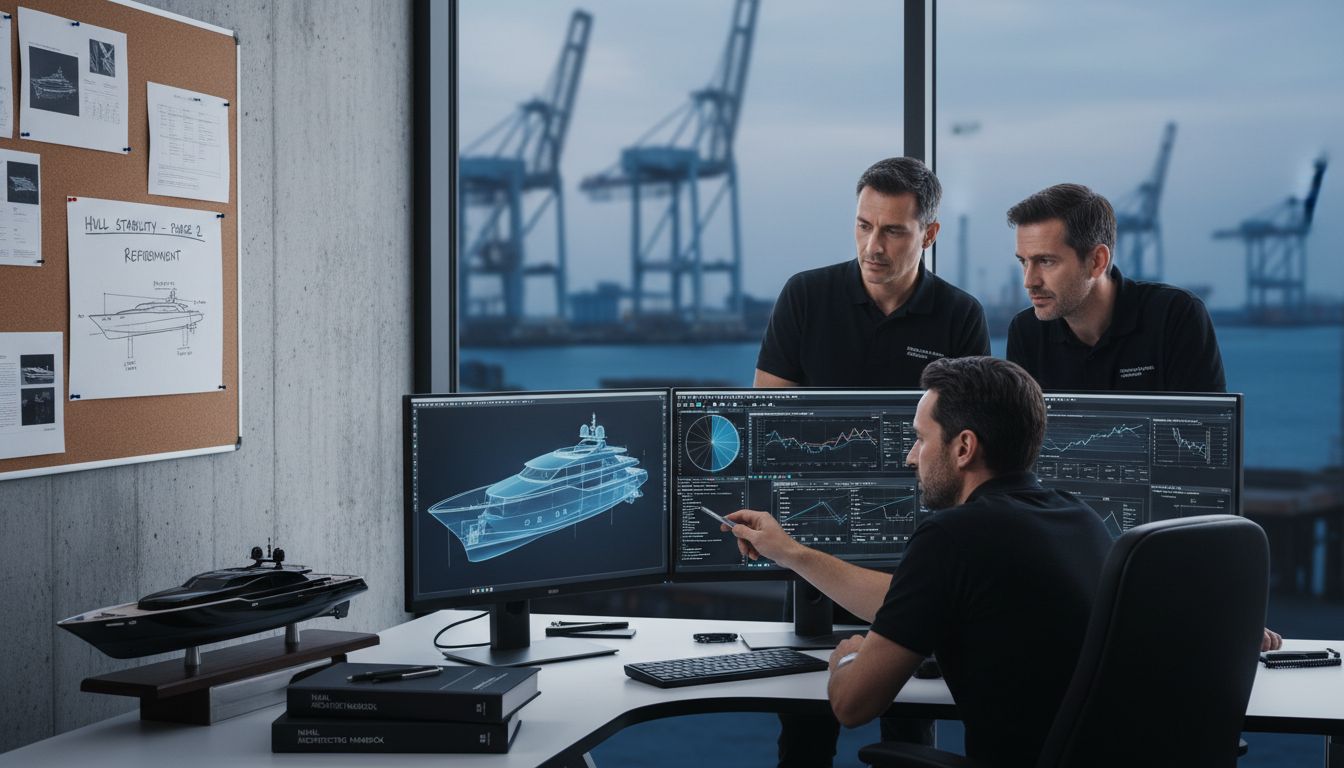
Begin by developing comprehensive formulas to estimate critical yacht parameters, such as light displacement, which serves as a foundational metric for performance calculations. Utilize advanced computational modeling to conduct in-depth analysis of hull dynamics, structural integrity, and hydrodynamic efficiency. Implement intelligent optimization techniques that focus on energy efficiency and performance to ensure your design meets both functional requirements and sustainability standards.
Dive deep into structural stress analysis, weight distribution calculations, and dynamic response simulations. Examine how different materials and construction techniques might impact overall vessel performance. Pay special attention to potential loading conditions, stability characteristics, and motion responses across various maritime environments.
Pro Tip: Create multiple computational models that simulate extreme scenarios. Understanding your yacht’s behavior under challenging conditions reveals hidden design opportunities.
As you refine the technical plans, maintain continuous communication with the client. Present detailed performance projections, structural analysis reports, and visual representations that demonstrate how your engineering approach translates their original vision into a technically sophisticated maritime design.
Step 4: Evaluate and optimize vessel performance
Vessel performance optimization transforms theoretical design into real world maritime excellence. Your goal is to leverage advanced computational techniques to validate and enhance every aspect of the yacht’s potential capabilities.
Advanced parametric modeling provides powerful tools for generating and evaluating hull designs, allowing naval architects to explore multiple performance scenarios with unprecedented precision. Utilize sophisticated diffusion models that can generate complex hull configurations while simultaneously considering multiple design objectives and performance constraints. Implement conditional guided optimization techniques that systematically evaluate how subtle design modifications impact overall vessel performance across different maritime conditions.
Focus on key performance metrics including fuel efficiency, speed potential, stability characteristics, and maneuverability. Develop comprehensive simulation frameworks that test your design under diverse scenarios ranging from calm coastal waters to challenging open ocean environments. Use computational fluid dynamics modeling to analyze hydrodynamic efficiency, examining how hull geometry influences resistance, propulsion efficiency, and overall energy consumption.
Pro Tip: Create performance benchmark comparisons against industry standards. This objective approach helps demonstrate the tangible improvements in your design.
As you complete the performance evaluation, prepare a detailed report that translates complex technical data into clear visual representations. Your analysis should provide clients with a comprehensive understanding of how each design decision contributes to the vessel’s ultimate performance potential.
Step 5: Verify compliance and oversee final delivery
The final stage of yacht design represents a critical intersection of technical precision, regulatory compliance, and client satisfaction. Your objective is to transform the meticulously engineered design into a real-world maritime masterpiece that meets every performance and safety standard.
Comprehensive engineering verification involves a systematic approach to ensuring design integrity, especially when dealing with complex maritime vessels. Conduct thorough inspections that cover structural integrity, safety systems, environmental compliance, and performance benchmarks. Prioritize adherence to international maritime safety and environmental standards, verifying that every aspect of the yacht meets or exceeds regulatory requirements for commercial and recreational maritime operations.
Develop a comprehensive final delivery checklist that encompasses technical, legal, and aesthetic considerations. This should include detailed documentation of performance tests, certification verifications, safety system assessments, and compliance documentation. Coordinate closely with classification societies, regulatory bodies, and the client to ensure a seamless final inspection and delivery process.
Pro Tip: Create a multi staged final verification protocol that includes third party independent assessments to provide additional credibility and client confidence.
As you approach final delivery, organize a comprehensive walkthrough with the client. Demonstrate the vessel’s capabilities, explain technical features, and provide detailed operational guidelines. This final interaction transforms your technical achievement into a tangible maritime experience that reflects your design expertise and commitment to excellence.
Elevate Your Yacht Design Journey with Expert Naval Architecture
Navigating the complex steps of yacht design calls for more than technical skill. The challenges of translating client visions into refined engineering, optimizing vessel performance, and ensuring regulatory compliance can overwhelm even the most passionate yacht enthusiasts. This article highlights key points such as defining precise design requirements, refining engineering analysis, and enhancing performance with advanced modeling techniques.
At Opalinski Design House, we understand the emotional and technical demands of creating a bespoke luxury yacht. Our innovative solutions, including industry-altering patented features like fold-down transoms, address critical pain points like performance optimization and personalized aesthetics. Whether you are envisioning a custom ocean cruiser or a cutting-edge racing yacht, our commitment to quality and creativity ensures your dreams become reality.
Experience the difference that detailed naval architectural expertise and pioneering design innovation can make.
Transform your ideas into a masterpiece by connecting with our team today. Discover how our expert approach to yacht design and naval architecture can overcome the challenges outlined in the article. Don’t wait to bring your vision to life. Visit Opalinski Design House and request a consultation to start the journey toward your perfect vessel.
Frequently Asked Questions
What are the essential steps in the yacht design process?
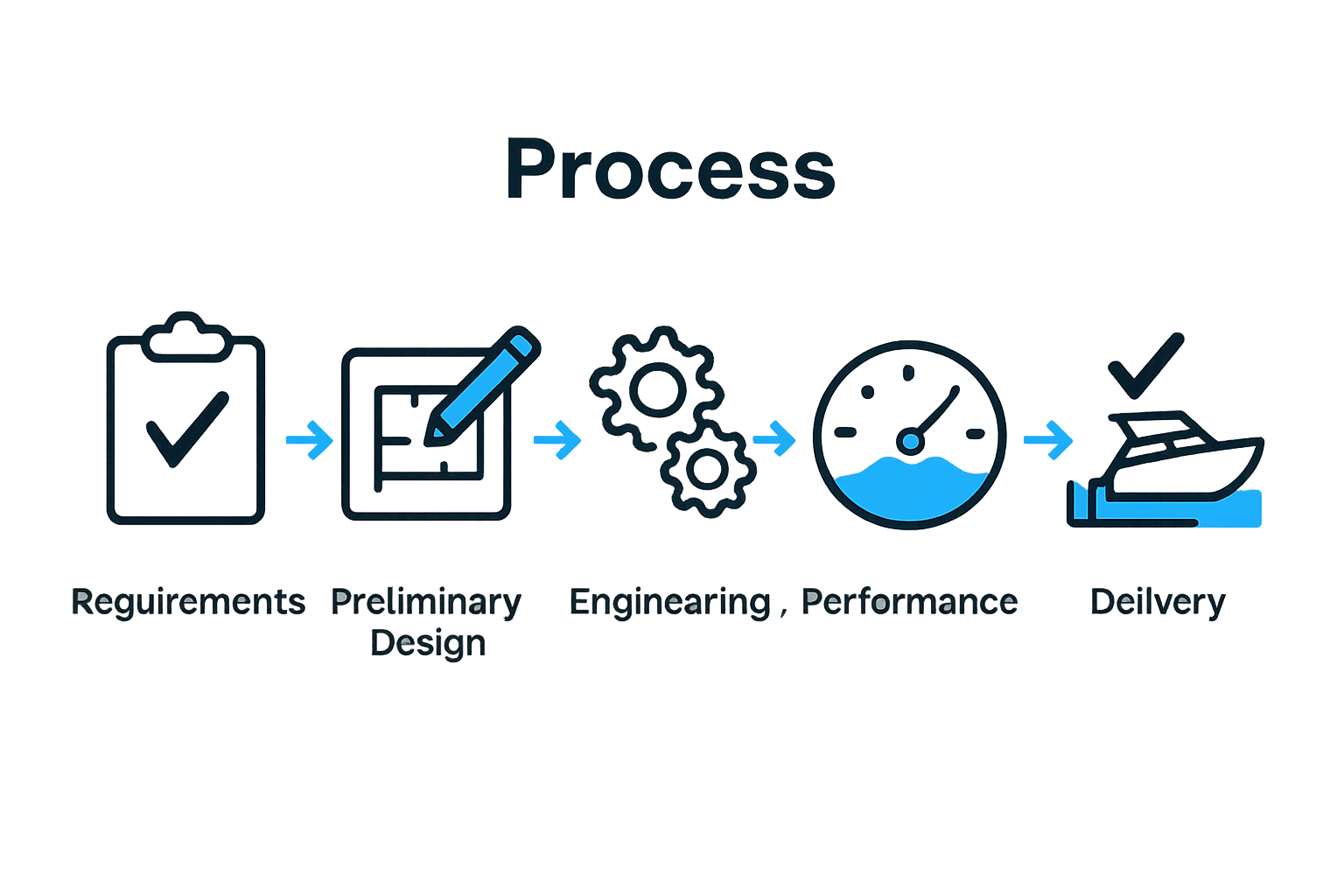
The essential steps in the yacht design process include defining design requirements, developing preliminary designs, refining detailed plans through engineering analysis, optimizing vessel performance, and verifying compliance before final delivery. Start by gathering client needs to inform your design decisions.
How do I effectively capture my client’s vision for yacht design?
To effectively capture your client’s vision, conduct in-depth interviews that explore both technical specifications and emotional aspirations. Create a structured discovery questionnaire to cover intended usage, performance expectations, and aesthetic preferences.
What tools can be used to evaluate yacht performance during the design process?
Advanced computational modeling and simulation tools are used to evaluate yacht performance. Implement computational fluid dynamics to analyze hydrodynamic efficiency and optimize hull designs based on performance metrics like speed and fuel efficiency.
How can I ensure compliance with maritime safety standards during yacht design?
To ensure compliance with maritime safety standards, conduct thorough inspections at every design stage, focusing on structural integrity and safety systems. Prepare a comprehensive final delivery checklist that includes documentation for safety system assessments and compliance verification.
What should be included in the final delivery walkthrough with the client?
The final delivery walkthrough should include demonstrations of the yacht’s capabilities, explanations of technical features, and detailed operational guidelines. This thorough presentation helps clients understand their yacht and builds confidence in their investment.
Recommended
Comments