
7 Key Naval Architecture Best Practices for Yacht Innovation
Over 80 percent of American yacht owners prioritize stability and innovation when selecting a vessel. This focus goes far beyond aesthetics, shaping every detail from hull form to onboard technology. As safety, sustainability, and smart features become standard expectations, leading naval architects are redefining what it means to build an exceptional yacht. Discover how these design strategies are shaping not just stunning boats but smarter, safer, and more luxurious experiences at sea.
Table of Contents
Quick Summary
Takeaway | Explanation |
1. Prioritize yacht stability for safety | Ensuring stability protects passengers and improves vessel performance under varying maritime conditions. |
2. Embrace efficient hull designs | Optimal hull shapes increase speed, decrease fuel consumption, and enhance comfort through reduced water resistance. |
3. Integrate sustainable materials | Using eco-friendly materials and processes reduces environmental impact and promotes fuel efficiency in yacht design. |
4. Optimize interior spaces | Thoughtful interior design enhances comfort and functionality, creating luxurious environments while maximizing available space. |
5. Foster collaboration with clients | Continuous communication between architects and owners ensures that visions are aligned and effectively translated into design. |
1. Prioritize Stability and Safety in Every Design
Stability is the cornerstone of exceptional yacht design. When naval architects approach vessel creation, ensuring the boat remains safe and secure under all maritime conditions becomes their fundamental mission.
Understanding yacht stability requires deep knowledge of complex engineering principles. Professionals analyze multiple critical factors including center of gravity, buoyancy distribution, and wave interaction dynamics. The goal is preventing vessel rollover or dangerous listing that could compromise passenger safety.
One innovative approach naval architects employ involves advanced hull designs like the Small Waterplane Area Twin Hull (SWATH), which minimizes surface wave interactions. This design significantly reduces wave induced motion by creating a slim waterline profile that dramatically improves vessel stability.
Practical implementation means conducting rigorous stability calculations and computational simulations before finalizing any yacht design. Naval architects must mathematically model potential scenarios including sudden weight shifts, wind conditions, and oceanic wave patterns. They use specialized software to simulate hundreds of potential maritime environments.
Key stability assessment strategies include:
Measuring metacentric height to determine roll resistance
Calculating maximum stability angles
Analyzing weight distribution across vessel decks
Modeling potential emergency scenario responses
Masterful yacht designers recognize that stability is not just a technical requirement. It represents a fundamental commitment to passenger safety and vessel performance across unpredictable maritime environments.
The most successful naval architects transform complex mathematical principles into elegant, secure vessel designs that inspire confidence from first glance to open ocean performance.
2. Embrace Efficient Hull Forms for Performance
The hull is the heartbeat of yacht performance. Designing an efficient hull shape determines everything from speed and fuel consumption to stability and passenger comfort.
Modern naval architects are revolutionizing hull design through advanced computational techniques. Intelligent optimization techniques now enable engineers to create hull forms that dramatically reduce resistance and maximize maritime performance. These methods leverage sophisticated algorithms that simulate countless design variations to identify the most efficient configurations.
Key Performance Factors in hull design include:
Minimizing water resistance
Optimizing wave interaction dynamics
Reducing fuel consumption
Enhancing overall vessel maneuverability
Research demonstrates that innovative approaches like using NURBS surfaces can transform hull design. Advanced computational methods allow naval architects to model precise hull deformations that improve vertical motion performance in challenging maritime environments.
Practical implementation requires a multidisciplinary approach. Naval architects must blend mathematical modeling, computational simulation, and deep understanding of maritime physics. This means using specialized software to analyze hull performance under various conditions including calm waters and turbulent wave scenarios.
The most successful yacht designs emerge from a holistic approach that balances aesthetic elegance with scientific precision. By embracing cutting edge optimization techniques, naval architects can create vessels that are not just beautiful but engineered for exceptional maritime performance.
3. Integrate Sustainable Materials and Technologies
Sustainability is no longer an optional feature in yacht design. It is now a fundamental requirement that defines the future of maritime engineering.
Naval architects are pioneering innovative approaches to reduce environmental impact. Computational fluid dynamics research demonstrates how strategic material selection and advanced design techniques can dramatically minimize fuel consumption and carbon emissions.
Sustainable Design Strategies include:
Utilizing lightweight composite materials
Implementing advanced hydrodynamic hull configurations
Integrating renewable energy systems
Selecting low environmental impact manufacturing processes
Numerical simulations of research vessel designs reveal that thoughtful material choices can reduce water resistance by up to 30 percent. This translates into significant fuel savings and reduced environmental footprint.
Practical implementation requires a holistic approach. Naval architects must consider material properties at every stage of design including weight distribution, structural integrity, and long term performance sustainability.
The most forward thinking yacht designers recognize that sustainable technologies are not just environmentally responsible. They represent a competitive advantage in a market increasingly focused on ecological consciousness and performance efficiency.
By embracing innovative materials and computational design techniques, naval architects can create vessels that are not only beautiful and high performing but also environmentally intelligent.
4. Optimize Interior Spaces for Comfort and Style
Interior yacht design represents the critical intersection between functional engineering and luxurious living. The challenge for naval architects lies in creating spaces that are both visually stunning and supremely practical.
Sophisticated CAD tools now enable designers to craft interior spaces with unprecedented precision. These computational approaches allow for meticulous planning that maximizes every square inch of available vessel space.
Strategic Interior Design Principles include:
Creating multifunctional living areas
Utilizing intelligent storage solutions
Balancing aesthetic appeal with structural integrity
Designing flexible spaces that adapt to different uses
Interesting innovations like the inverted bow design demonstrate how hull geometry can dramatically influence interior configurations. This approach not only enhances performance but also opens up creative possibilities for interior layouts.
Practical implementation requires a holistic approach that considers passenger experience, ergonomic efficiency, and visual harmony. Naval architects must think beyond traditional design boundaries transforming limited marine spaces into luxurious environments that feel expansive and comfortable.
Masterful yacht interior design transforms technical constraints into opportunities for innovation. By integrating advanced computational modeling with creative spatial thinking, designers can create interiors that are both technically sophisticated and emotionally compelling.
5. Leverage Advanced Computational Design Tools
Computer aided design has transformed naval architecture from an art into a precise science. Modern yacht designers now harness powerful computational tools that can simulate complex maritime scenarios with extraordinary accuracy.
Principal Component Analysis and Deep Neural Networks are revolutionizing hull form optimization. These advanced algorithms enable naval architects to explore design variations that would be impossible through traditional methods, dramatically accelerating the design process.
Computational Design Capabilities include:
Generating thousands of design iterations instantly
Predicting vessel performance under multiple conditions
Reducing physical prototype requirements
Minimizing design development costs
Optimizing structural and hydrodynamic characteristics
Deep Learning Physics Optimization frameworks represent the cutting edge of maritime design technology. These sophisticated systems integrate Computer Aided Design engines with machine learning models to create vessel designs that are both scientifically precise and aesthetically compelling.
Practical implementation requires naval architects to develop computational literacy. This means understanding not just the technical capabilities of design tools but also how to interpret and apply their complex insights.
The most innovative yacht designers view computational tools as collaborative partners. By combining human creativity with machine intelligence, they can push the boundaries of what is possible in maritime design transforming theoretical concepts into real world maritime marvels.
6. Innovate with Custom Features and Smart Functionality
Innovation in yacht design transcends traditional engineering boundaries. Modern naval architects are transforming vessels from simple watercraft into intelligent floating environments that anticipate and respond to user needs.
The Bruce foil technology represents a perfect example of intelligent design innovation. This advanced feature reduces vessel heeling by strategically aligning sail and underwater foil forces, dramatically improving stability and performance.
Smart Functionality Design Elements include:
Adaptive navigation systems
Automated climate control mechanisms
Integrated energy management platforms
Responsive structural components
Advanced safety monitoring networks
Velocity Prediction Programs exemplify how computational tools enable designers to simulate and optimize custom yacht features. These sophisticated systems allow naval architects to predict vessel performance under diverse maritime conditions before physical construction begins.
Practical implementation requires a holistic approach that integrates cutting edge technology with user centered design principles. Successful innovations solve real world challenges while enhancing the overall maritime experience.
The most groundbreaking yacht designs view technology not as an add on but as an intrinsic part of the vessel’s DNA. By embedding smart functionalities directly into the design process, naval architects create vessels that are more responsive intelligent and ultimately more enjoyable.
7. Ensure Ongoing Collaboration Between Owners and Architects
Navigating the complex world of yacht design requires more than technical expertise. It demands a dynamic partnership between naval architects and vessel owners that transforms vision into reality.
Hull design processes reveal that successful yacht creation emerges from continuous dialogue and mutual understanding. The most exceptional vessels are born not from singular genius but from collaborative exploration.
Effective Collaboration Strategies include:
Establishing clear communication channels
Scheduling regular design review meetings
Creating transparent feedback mechanisms
Aligning technical capabilities with owner expectations
Maintaining flexibility throughout the design process
Historic examples like the Lrssen effect demonstrate how breakthrough innovations often emerge from deep collaboration between engineers and stakeholders. These partnerships transform theoretical concepts into groundbreaking maritime solutions.
Practical implementation requires mutual respect and open minded communication. Naval architects must balance technical constraints with owner aspirations while owners must trust the expertise of design professionals.
The most extraordinary yacht designs are not simply constructed. They are co created. By viewing the design process as a shared journey of discovery owners and architects can unlock possibilities that transcend traditional maritime engineering boundaries.
Below is a comprehensive table summarizing the main strategies and considerations in yacht design as discussed throughout the article.
Strategy | Implementation | Expected Results |
Prioritize Stability and Safety | Advanced hull designs like SWATH, rigorous stability calculations, simulations | Enhanced passenger safety and vessel stability |
Embrace Efficient Hull Forms | Computational techniques, intelligent optimization, NURBS surfaces | Reduced water resistance, increased speed, and fuel efficiency |
Integrate Sustainable Materials | Lightweight composites, hydrodynamic hulls, renewable energy systems | Lower environmental impact, reduced fuel consumption |
Optimize Interior Spaces | CAD tools, multifunctional areas, intelligent storage | Luxurious and practical living environments |
Leverage Advanced Computational Tools | Machine learning models, PCA, design iterations | Accelerated design process, optimized performance |
Innovate with Custom Features | Smart functionalities, adaptive systems, responsive components | Enhanced yacht performance and user experience |
Ensure Collaboration with Owners | Clear communication, regular reviews, feedback mechanisms | Tailored design outcomes that align with owner’s vision |
Elevate Your Yacht Innovation with Expert Naval Architecture
The article highlights critical challenges like achieving superior vessel stability, integrating sustainable materials, and leveraging advanced computational design tools to create yachts that are both luxurious and high-performing. At Opalinski Design House, we understand these complexities intimately. Our pioneering solutions, including patented fold-down transoms and rotational transoms designed for large vessels over 50 meters, demonstrate our commitment to transforming these technical demands into breathtaking, practical realities.
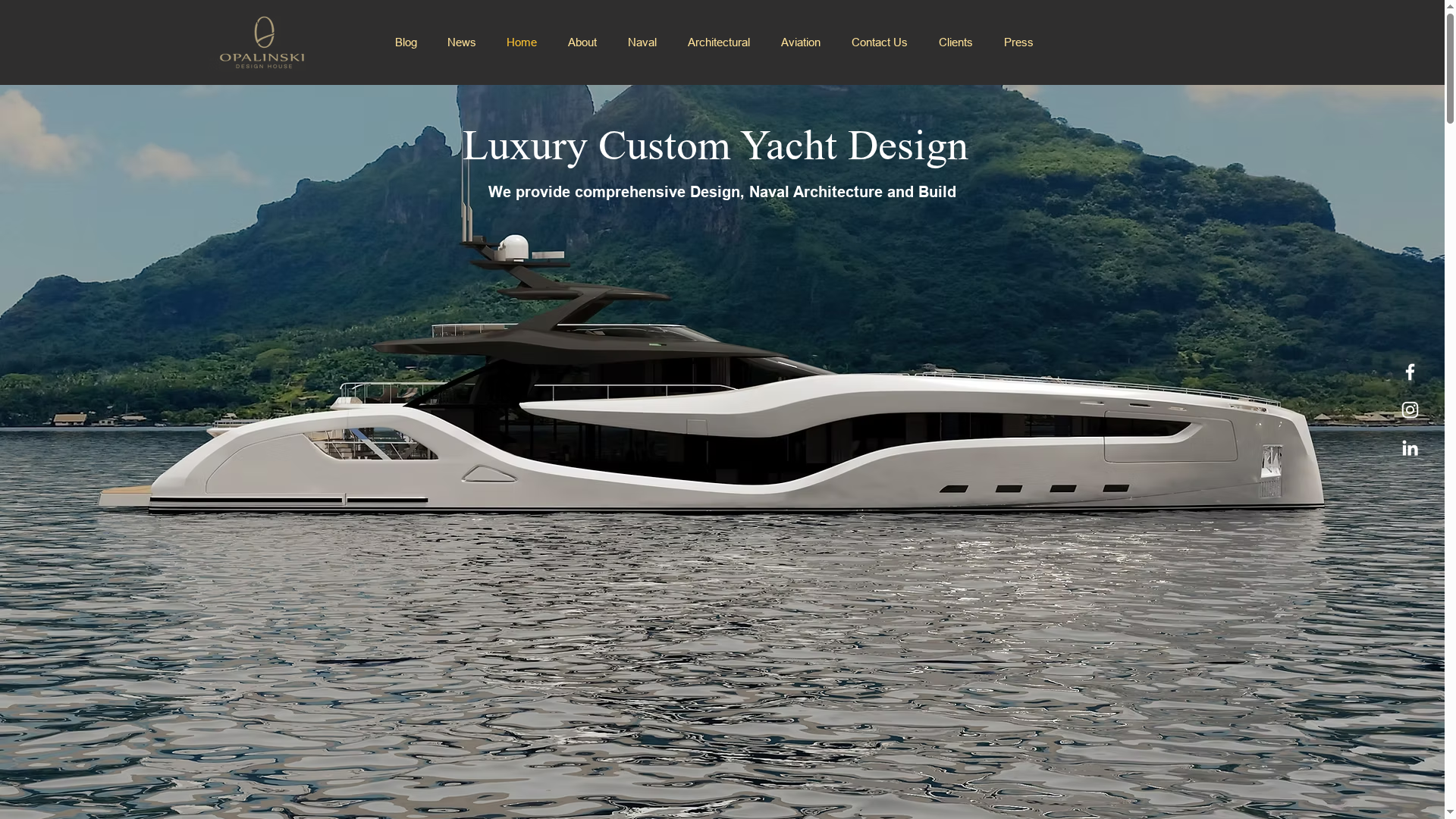
Discover how our bespoke yacht design and naval architecture services bring cutting-edge innovation to life with unparalleled precision and style. Visit Opalinski Design House to explore a legacy of industry-changing innovations and schedule your personal consultation today. Start turning your vision into a masterpiece that excels in stability, sustainability, and smart functionality now.
Frequently Asked Questions
What is the importance of stability in yacht design?
Stability is crucial in yacht design as it ensures the vessel remains safe and secure under various maritime conditions. To achieve this, engage in detailed stability calculations and simulations to analyze factors like center of gravity and buoyancy distribution.
How can architects embrace efficient hull forms to enhance yacht performance?
Architects can enhance yacht performance by designing efficient hull shapes that minimize water resistance and optimize fuel consumption. Focus on using advanced computational techniques to generate and test multiple hull configurations for improved speed and maneuverability.
What sustainable materials should be considered in yacht design?
When designing yachts, consider utilizing lightweight composite materials and integrating renewable energy systems. Aim to reduce environmental impact significantly—potentially by up to 30% in fuel consumption—by making thoughtful material selections.
How can interior spaces be optimized for comfort on a yacht?
To optimize interior spaces for comfort, create multifunctional living areas and utilize intelligent storage solutions. Plan the layout carefully to ensure a balance between aesthetic appeal and practical functionality, enhancing the overall passenger experience.
What role do advanced computational design tools play in yacht architecture?
Advanced computational design tools are essential in yacht architecture, allowing for the rapid generation of design iterations and performance predictions. Invest time in learning these tools to streamline the design process and reduce development costs significantly.
How can collaboration between yacht owners and architects enhance the design process?
Collaboration between yacht owners and architects is key to creating exceptional vessels. Maintain clear communication and schedule regular design review meetings to align expectations and incorporate owner feedback effectively throughout the design journey.
Recommended
Comments