
7 Essentials for a Luxury Yacht Design Checklist
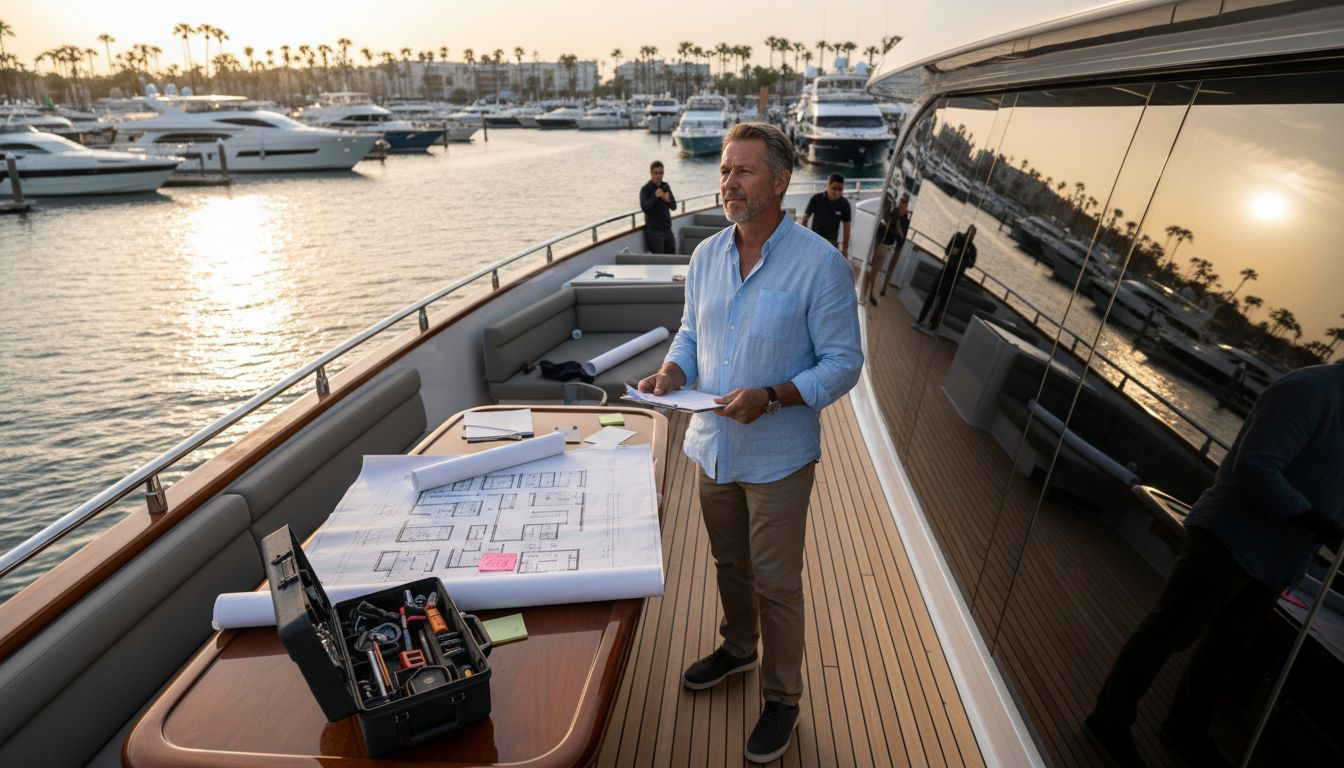
Over 80 percent of luxury yacht owners choose custom design to align with their personal lifestyle and specific ambitions. For American and global clients, the opportunity to define your yacht’s purpose ensures every detail supports your vision for ocean travel and entertaining. This guide reveals how advanced innovations like fold-down transoms can transform not just the vessel’s function but your daily experience on the water, helping you create a yacht that’s truly your own.
Table of Contents
Quick Summary
Takeaway | Explanation |
1. Define yacht’s purpose clearly | Clearly articulate how you plan to use your yacht to inform all design choices, ensuring it reflects your lifestyle. |
2. Select appropriate hull and materials | Choose hull shape and construction materials based on intended use for optimal performance and durability in specific conditions. |
3. Maximize interior space smartly | Implement smart designs and multifunctional furniture to optimize limited yacht spaces for comfort and functionality. |
4. Integrate fold-down transoms | Incorporating fold-down transoms enhances utility, allowing for better access to the water and expanded deck space. |
5. Prioritize sustainable solutions | Embrace eco-friendly technologies and materials in yacht design to minimize environmental impact while maintaining luxury standards. |
1. Define Your Yacht’s Intended Use and Lifestyle
Defining the intended purpose of your luxury yacht is the critical first step in creating a truly personalized maritime experience. Your yacht should be more than just a vessel it should be a precise reflection of your lifestyle, aspirations, and how you envision connecting with the ocean.
Luxury yacht designs are not one size fits all. Luxury yacht experiences range dramatically from extended ocean voyages to coastal leisure and high-end entertainment platforms. Understanding your specific use case determines everything from hull design to interior configurations.
Consider the primary activities you will pursue on your yacht. Are you planning extended transoceanic journeys requiring robust navigation systems and ample storage? Or will your yacht serve as an elegant entertainment venue for business associates and social gatherings? Each scenario demands unique design considerations.
Factor in practical elements like passenger capacity, preferred cruising regions, and frequency of use. A yacht designed for Mediterranean coastal cruising will differ significantly from one built for Pacific crossing expeditions. Your intended lifestyle dictates critical design choices such as:
Key Design Considerations:
Cabin layout and sleeping configurations
Storage requirements
Entertainment spaces
Technical equipment needs
Onboard amenities
Range and fuel efficiency
Navigation and communication systems
By precisely defining your yacht’s purpose upfront, you transform a beautiful vessel into a personalized sanctuary that seamlessly integrates with your life. The more specific you can be about your vision, the more accurately designers can craft a yacht that feels like a natural extension of your personal world.
Pro tip: Schedule comprehensive consultations with naval architects who specialize in bespoke yacht design to thoroughly explore and refine your vision before finalizing any design specifications.
2. Choose Hull Shape and Construction Materials
Selecting the right hull shape and construction materials is a pivotal decision that directly impacts your yacht’s performance, durability, and overall maritime experience. Your choice will determine everything from speed and fuel efficiency to comfort and seaworthiness.
Yacht hull designs are not uniform they are sophisticated engineering solutions tailored to specific maritime requirements. Yacht hull design fundamentally influences performance across multiple critical parameters including stability, speed, and efficiency.
Hull Shape Considerations:
Displacement Hulls: Ideal for long range cruising with smooth ocean traversal
Planing Hulls: Designed for high speed and quick acceleration
Hybrid Hulls: Combine characteristics of displacement and planing designs for versatile performance
Construction Material Options:
Steel: Offers maximum durability and strength for challenging sea conditions
Aluminum: Provides lightweight construction with excellent corrosion resistance
Fiberglass: Versatile material allowing complex design molding
Composite Materials: Advanced options like carbon fiber delivering exceptional strength to weight ratios
Choosing between these materials requires careful evaluation of your specific yacht usage. Yacht hull materials significantly impact durability and maintenance requirements. A long distance explorer yacht might prioritize steel or aluminum for robustness, while a performance yacht could leverage carbon fiber composites for speed and agility.
Consider factors like intended cruising regions, expected weather conditions, maintenance capabilities, and performance expectations when making your selection. Each material brings unique advantages that must align with your specific maritime lifestyle and operational requirements.
Pro tip: Consult specialized naval architects who can provide personalized recommendations based on a comprehensive analysis of your specific yacht design objectives and performance expectations.
3. Maximize Space with Smart Interior Layouts
Luxury yacht interior design is an intricate art of transforming limited maritime spaces into expansive, functional environments that feel both elegant and purposeful. Maximizing space goes far beyond simple measurements it is about creating intelligent, adaptable living areas that respond to your dynamic lifestyle.
Maritime ergonomics creates seamless spatial solutions by utilizing innovative design strategies that make every square foot count. The goal is to craft interiors that feel simultaneously spacious and intimate, comfortable and efficient.
Smart Space Optimization Strategies:
Multifunctional Furniture: Pieces that serve multiple purposes
Integrated Storage: Hidden compartments that maintain clean aesthetics
Modular Design: Flexible areas that can be reconfigured quickly
Strategic Lighting: Creating visual depth and perceived openness
Key Design Principles:
Use lightweight materials that create visual transparency
Implement sliding and folding elements for flexible spaces
Incorporate mirrors to enhance perceived space
Select neutral color palettes that expand visual boundaries
Yacht interior design balances sophistication and practicality through clever spatial organization. This means thoughtfully engineering each area to serve multiple functions without feeling cramped or cluttered. Think convertible dining areas that transform into workspaces, or bedroom configurations that adapt to different passenger needs.
Consider custom solutions like retractable furniture, ceiling mounted storage systems, and built in mechanisms that can dramatically increase usable space. Technology plays a crucial role hidden charging stations, touch activated surfaces, and smart home integration can make compact areas feel remarkably expansive.
Pro tip: Work with specialized maritime interior designers who understand the unique spatial challenges of yacht design and can create custom solutions that maximize every inch of available space.
4. Integrate Innovative Features like Fold-Down Transoms
Innovative yacht design transcends traditional boundaries by incorporating transformative features that expand your vessel’s functionality and redefine maritime experiences. Fold-down transoms represent a groundbreaking approach to maximizing usable space and enhancing onboard versatility.
Integrated yacht design transforms luxury experiences through cutting-edge technological solutions that adapt to owners’ dynamic needs. The fold-down transom is a prime example of engineering ingenuity that revolutionizes maritime mobility and recreational potential.
Fold-Down Transom Benefits:
Expands usable deck space
Creates seamless water access
Enhances boarding and swimming platforms
Increases vessel functionality
Provides versatile entertainment options
Technical Advantages:
Hydraulic mechanisms for smooth operation
Reinforced structural design
Minimal maintenance requirements
Customizable configuration options
Integrated safety features
The genius of fold-down transoms lies in their ability to transform a yacht’s profile within moments. When deployed, these innovative features create expansive platforms that blur the boundaries between vessel and ocean. They offer unprecedented flexibility for water sports, diving, sunbathing, and direct marine interaction.
Modern yacht designers are increasingly viewing these features not as optional additions but as fundamental design elements. The fold-down transom represents more than a technical innovation it symbolizes a philosophical approach to maritime design that prioritizes adaptability and user experience.
Consider the potential scenarios swimming directly from your yacht, launching water toys with unprecedented ease, or creating an intimate ocean level lounge that connects you directly with marine environments. These are not futuristic concepts but contemporary realities enabled by intelligent design.
Pro tip: Engage naval architects who specialize in innovative transom designs to explore custom solutions that can be precisely tailored to your specific maritime lifestyle and functional requirements.
5. Prioritize Sustainable and Eco-Friendly Solutions
Sustainability is no longer an optional feature in luxury yacht design but a fundamental requirement for forward thinking maritime enthusiasts. Modern yacht owners recognize that environmental responsibility and exceptional performance can coexist harmoniously.
Eco-friendly yacht innovations transform maritime experiences by integrating cutting edge technologies that minimize environmental impact without compromising luxury standards.
Sustainable Design Strategies:
Hybrid propulsion systems
Solar power integration
Recycled composite materials
Responsibly sourced wood and fabrics
Energy efficient onboard systems
Key Sustainability Focus Areas:
Emissions Reduction: Minimizing carbon footprint
Resource Conservation: Using renewable energy sources
Material Selection: Choosing environmentally responsible alternatives
Technological Innovation: Implementing advanced green technologies
Sustainable yacht design goes beyond superficial green marketing. It represents a comprehensive approach to maritime engineering that considers environmental impact at every stage of design and operation. Advanced hybrid propulsion systems can dramatically reduce fuel consumption while maintaining superior performance capabilities.
Technological innovations now allow yacht designers to create vessels that generate their own renewable energy. Integrated solar panels lightweight wind turbines and advanced battery storage systems enable extended cruising with minimal environmental disruption. These solutions are not about compromise but about reimagining luxury through intelligent design.
Materials selection plays a crucial role in sustainable yacht construction. Recycled composites responsibly sourced wood and low impact fabrics can significantly reduce the environmental footprint without sacrificing aesthetic quality or durability. Each material choice becomes a statement of environmental commitment.
Pro tip: Collaborate with naval architects specializing in sustainable design to develop a comprehensive green strategy that aligns cutting edge environmental technologies with your specific yacht performance requirements.
6. Select High-End Finishes and Custom Styling
Luxury yacht interiors are more than mere spaces they are meticulously crafted personal sanctuaries that reflect your unique aesthetic vision and lifestyle. Every surface texture material and design element communicates a sophisticated narrative of your individual taste.
Luxury yacht interiors blend elegance and innovation through carefully selected finishes that transform maritime spaces into extraordinary environments.
Premium Material Selection:
Polished marble surfaces
Exotic hardwoods like teak and mahogany
Hand stitched premium leathers
Marine grade carbon fiber elements
Custom metal precision fittings
Design Philosophy Elements:
Bespoke Furniture: Exclusively designed pieces
Integrated Lighting: Sophisticated illumination systems
Artisan Craftsmanship: Handcrafted details
Personal Expression: Spaces that reflect owner identity
Custom styling transcends standard design approaches by creating living environments that are simultaneously functional and deeply personal. Advanced yacht designers understand that true luxury is not about generic opulence but about creating spaces that feel intuitively connected to the owner.
Consider how each material and finish contributes to your overall sensory experience. Marine grade teak provides durability while offering warm visual richness. Hand stitched leather surfaces create tactile elegance that machine manufactured materials cannot replicate. Carbon fiber elements introduce a contemporary technological sophistication that speaks to performance and innovation.
The most extraordinary yacht interiors tell a story. They blend classic maritime elegance with contemporary minimalism creating spaces that feel timeless yet thoroughly modern. Your design should feel like a natural extension of your personal aesthetic not a generic luxury template.
Pro tip: Collaborate directly with master craftsmen and designers who specialize in maritime interiors to develop a truly personalized styling approach that reflects your unique vision and lifestyle.
7. Ensure Compliance with Safety and Maritime Standards
Navigating the complex world of maritime safety standards is not just about meeting legal requirements it is about protecting lives, ensuring vessel integrity, and maintaining the highest levels of operational excellence. Your yacht represents a sophisticated system that must adhere to rigorous international regulations.
Maritime compliance guarantees vessel safety through a comprehensive framework of international conventions and regulatory protocols.
Key Compliance Frameworks:
SOLAS (Safety of Life at Sea)
MARPOL (Marine Pollution Prevention)
STCW (Standards of Training Certification and Watchkeeping)
MLC (Maritime Labor Convention)
Critical Compliance Elements:
Safety equipment certification
Crew training and documentation
Environmental protection protocols
Periodic vessel inspections
Security management systems
Compliance is a dynamic process that requires continuous attention and proactive management. Flag state regulations serve as the primary governance mechanism, establishing baseline requirements for vessel operation. Classification societies conduct independent technical assessments to verify that yachts meet stringent international standards.
Your yacht safety strategy should encompass more than basic regulatory compliance. It requires a holistic approach that integrates advanced safety technologies, comprehensive crew training, and robust emergency response protocols. This means implementing personalized ISM and ISPS systems that provide global support and real time risk management.
Technical compliance involves multiple layers of verification. This includes maintaining up to date safety certifications, ensuring crew members have current qualifications, and conducting regular equipment surveys. Each inspection and certification represents a critical checkpoint in maintaining your vessel’s legal and operational status.
Environmental regulations have become increasingly sophisticated, requiring yacht owners to implement comprehensive pollution prevention strategies. This goes beyond basic waste management to include advanced fuel systems, emission control technologies, and sustainable operational practices.
Pro tip: Develop a comprehensive compliance management system that includes regular internal audits, ongoing crew training, and proactive engagement with maritime regulatory experts to stay ahead of evolving international standards.
Below is a table summarizing the comprehensive steps, considerations, and strategies for designing, building, and equipping a luxury yacht, as highlighted in the article.
Aspect | Description | Key Factors to Consider |
Define Use and Lifestyle | Tailor the yacht design to match specific needs and desired activities. | Primary activities, passenger capacity, and cruising regions. |
Hull Shape and Materials | Select the best hull type and material for performance and durability. | Displacement vs. planing hulls; steel, aluminum, fiberglass, or composite materials. |
Smart Interior Layouts | Optimize interior space with innovative designs and adaptable features. | Multifunctional furniture, modular designs, and integrated storage solutions. |
Innovative Features | Incorporate advanced elements like fold-down transoms for versatility. | Hydraulic mechanisms and reinforced structural designs. |
Eco-Friendly Solutions | Implement sustainable systems and materials to minimize environmental impact. | Hybrid propulsion, solar panels, recycled materials, and energy-efficient systems. |
High-End Finishes | Choose luxurious finishes and personalized interior styling. | Premium materials like marble, hardwood, leathers, and custom fittings. |
Safety and Compliance | Ensure adherence to maritime safety and international standards. | Regulatory frameworks like SOLAS, MARPOL, and STCW; safety equipment certifications. |
These points provide a condensed view of the article’s insights, outlining the essential elements in luxury yacht design and operation.
Elevate Your Yacht Design with Expertise That Matches Your Vision
Designing a luxury yacht requires mastering complex challenges like integrating innovative features such as fold-down transoms, optimizing interior spaces, and choosing sustainable materials just as outlined in the 7 Essentials for a Luxury Yacht Design Checklist. If you want a vessel that truly reflects your lifestyle and sets new standards in performance and style you need expert partners who understand every detail of bespoke yacht creation.
At Opalinski Design House, we combine cutting-edge naval architecture and personalized interior styling to solve key pain points from maximizing space to integrating patented technological innovations. Our pioneering work with fold-down bulkhead and rotational transoms delivers unmatched versatility and expanded deck functionality. You can explore how our innovative yacht design solutions align perfectly with your goals for sustainability, safety, and luxury.
Don’t compromise on your vision. Connect with the leaders in high-end yacht design today and transform your maritime dreams into reality. Visit Opalinski Design House to request a tailored consultation and begin crafting a yacht designed exclusively for you.
Frequently Asked Questions
What should I consider when defining my yacht’s intended use?
Defining your yacht’s intended use involves outlining the specific activities you plan to pursue, such as long ocean voyages or entertaining guests. Assess your lifestyle and desires to ensure the design aligns with your maritime goals, discussing them comprehensively with a naval architect.
How do I choose the right hull shape and construction materials for my yacht?
Selecting a hull shape and construction material is crucial for optimizing performance and comfort. Evaluate your cruising preferences and expected conditions, then consult with specialized naval architects to choose materials that enhance speed, durability, and suitability for your maritime lifestyle.
What are some effective smart interior layout strategies for maximizing yacht space?
To maximize space on your luxury yacht, incorporate multifunctional furniture, integrated storage, and flexible modular designs. Partner with a maritime interior designer to create layouts that intelligently utilize every area while maintaining a sense of spaciousness and elegance.
How can innovative features like fold-down transoms enhance my yacht experience?
Fold-down transoms can significantly expand usable deck space and create seamless access to the water. Consider integrating this feature to improve ways for swimming, lounging, and engaging in water activities, ensuring you discuss specific configurations with your yacht designer.
What sustainable design strategies should I prioritize for my yacht?
Prioritize sustainable design strategies like hybrid propulsion systems and energy-efficient systems to balance luxury with environmental responsibility. Aim to implement multiple eco-friendly features in your yacht project, thereby reducing its overall carbon footprint.
How do I ensure compliance with safety and maritime standards on my yacht?
Ensuring compliance involves understanding key maritime regulations such as SOLAS and MARPOL, along with regular inspections and proper crew training. Develop a compliance management system that includes scheduled audits to maintain up-to-date safety certifications and protect lives onboard.
Recommended
Comments