
Optimize Interior Layout Planning Workflow for Yachts
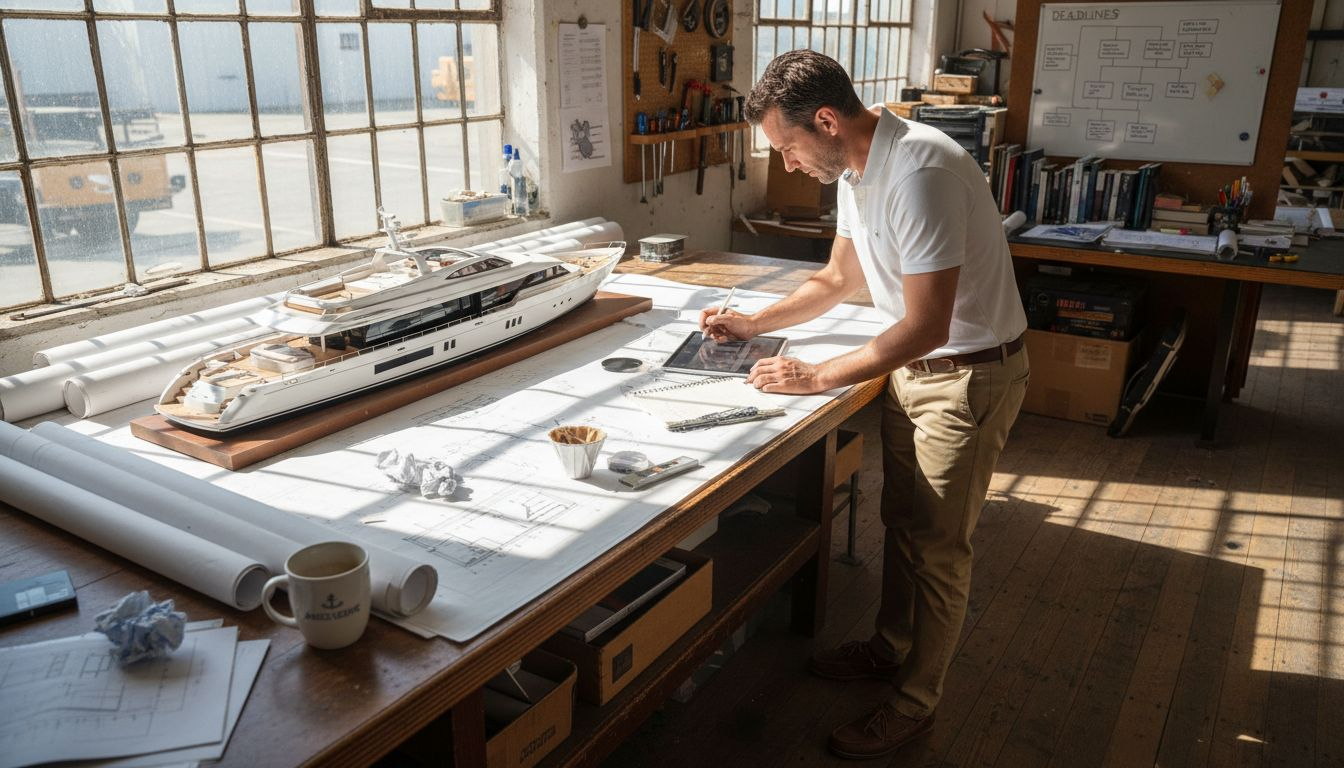
Most advice about yacht interior design overlooks a crucial reality: over 80 percent of American yacht owners now want layouts that seamlessly blend luxury with practical living space. With vessels increasingly serving as entertainment hubs, family retreats, and private offices, every square foot matters. This guide shares cutting-edge methods for transforming bare decks into personalized sanctuaries optimized for both sophistication and day-to-day comfort.
Table of Contents
Quick Summary
Key Point | Explanation |
1. Understand Owner’s Lifestyle | Conduct in-depth consultations to capture owners’ preferences and usage intentions for their yachts, which inform the design process. |
2. Define Functional Spatial Zones | Identify and organize yacht spaces like cabins and lounges to support various functions, ensuring smooth transitions and privacy for guests. |
3. Utilize Advanced Design Tools | Employ 3D modeling software to create precise visualizations of layout concepts, enhancing understanding and allowing for real-time adjustments. |
4. Focus on Ergonomic Flow | Design for natural circulation patterns and ease of movement between zones, incorporating multifunctional elements to maximize space efficiency. |
5. Validate with Visualization Techniques | Use photorealistic rendering and collaborative design reviews to gauge stakeholder feedback, ensuring the proposed design meets functional and aesthetic expectations. |
Step 1: Assess Owner Preferences and Lifestyle Requirements
Designing a yacht interior begins with understanding the unique lifestyle and personal vision of the owner. Your goal in this critical initial phase is to transform abstract preferences into a tangible design strategy that reflects their personality and functional requirements.
To effectively capture the owner’s vision, start with an in-depth consultation that explores how they intend to use their yacht. Designing a yacht interior starts with understanding the owner’s lifestyle to create a personalized space. This means asking targeted questions about their primary yacht usage whether it involves family holidays, business entertainment, social gatherings, or private retreats. Each purpose demands a distinct approach to spatial planning and aesthetic design.
During the consultation, develop a comprehensive profile that includes their entertainment style, family dynamics, professional needs, and personal aesthetic preferences. Pay close attention to specific requirements such as workspace configurations, entertainment areas, private relaxation zones, and guest accommodation needs. The goal is to design a yacht interior that feels like an extension of their personal living environment while maintaining the unique challenges of maritime design.
Pro tip: Create a detailed lifestyle questionnaire with visual mood board options to help owners articulate their design preferences more precisely and reveal nuanced aspects of their personal style.
Step 2: Define Spatial Zones and Prioritize Functions
Navigating the complex process of yacht interior design requires strategic spatial planning that transforms abstract concepts into functional living spaces. Your objective in this critical phase is to create a comprehensive layout that harmonizes owner preferences with practical maritime requirements.

Yacht floor plans organize living, social, and service areas into distinct spatial zones distributed across multiple decks. Begin by mapping out key functional areas such as guest cabins, crew quarters, salons, galleys, and recreational spaces like beach clubs and gyms. Each zone must be carefully considered to support the owner’s lifestyle while maintaining efficient operational flow. This means understanding how different areas will interact and ensuring smooth transitions between public and private spaces.
Consider the delicate balance between communal and intimate environments. Effective yacht interior design requires meticulous space planning to maximize utility and flow with arrangements that support both quiet retreats and lively gatherings. Pay special attention to circulation patterns that allow seamless movement for both guests and crew. Prioritize multifunctional spaces that can adapt to changing needs without compromising luxury or practical functionality.
Pro tip: Create a color coded deck plan that visualizes spatial zones, circulation paths, and potential multifunctional areas to help stakeholders understand the intricate design strategy.
Here’s a summary of common spatial zones found on luxury yachts and their typical functions:
Spatial Zone | Key Purpose | Typical Features |
Guest Cabins | Private accomodations | Beds, storage, en-suite |
Crew Quarters | Staff living/workspace | Bunk beds, lockers |
Salon/Lounge | Social gatherings | Sofas, dining, bar |
Galley | Food preparation and service | Kitchen, pantry |
Recreational Area | Entertainment and relaxation | Gym, beach club, spa |
Step 3: Develop Custom Layout Concepts Using Advanced Tools
Transforming initial owner preferences into a tangible yacht interior design requires sophisticated digital tools and strategic conceptualization. Your goal in this phase is to translate abstract ideas into precise, visually compelling layout concepts that capture the essence of the owner’s vision.
Leveraging advanced 3D modeling and design software becomes critical in this stage. Professional design platforms allow you to create detailed spatial representations that go beyond traditional drafting techniques. Creative process in yacht design transforms innovative concepts into actionable blueprints by providing precise visualization tools that help stakeholders understand the intricate relationship between form and function. Start by developing initial digital mockups that capture key spatial zones, ensuring each area reflects the specific requirements discussed during the owner consultation.
As you refine your layout concepts, integrate parametric design techniques that allow dynamic adjustments and real time modifications. Naval architecture workflows enable precision in luxury yacht design by supporting iterative development processes. This means creating flexible digital models that can rapidly incorporate feedback while maintaining structural integrity and aesthetic coherence. Pay careful attention to circulation patterns, sight lines, and the psychological flow between different onboard spaces.
Pro tip: Utilize render comparison tools to generate multiple design iterations simultaneously, allowing side by side visual evaluation of layout alternatives.
This comparison outlines advantages of digital mockups versus traditional floor plans in yacht interior design:
Approach | Advantage | Limitation |
Digital Mockups | Realistic visualization | Requires training |
Traditional Floor Plan | Easy to modify by hand | Limited visual impact |
Step 4: Refine Designs for Circulation and Ergonomic Flow
Perfecting a yacht’s interior layout requires meticulous attention to movement dynamics and spatial efficiency. Your objective is to create a design that enables smooth, intuitive navigation while maintaining the luxurious aesthetic that discerning yacht owners expect.
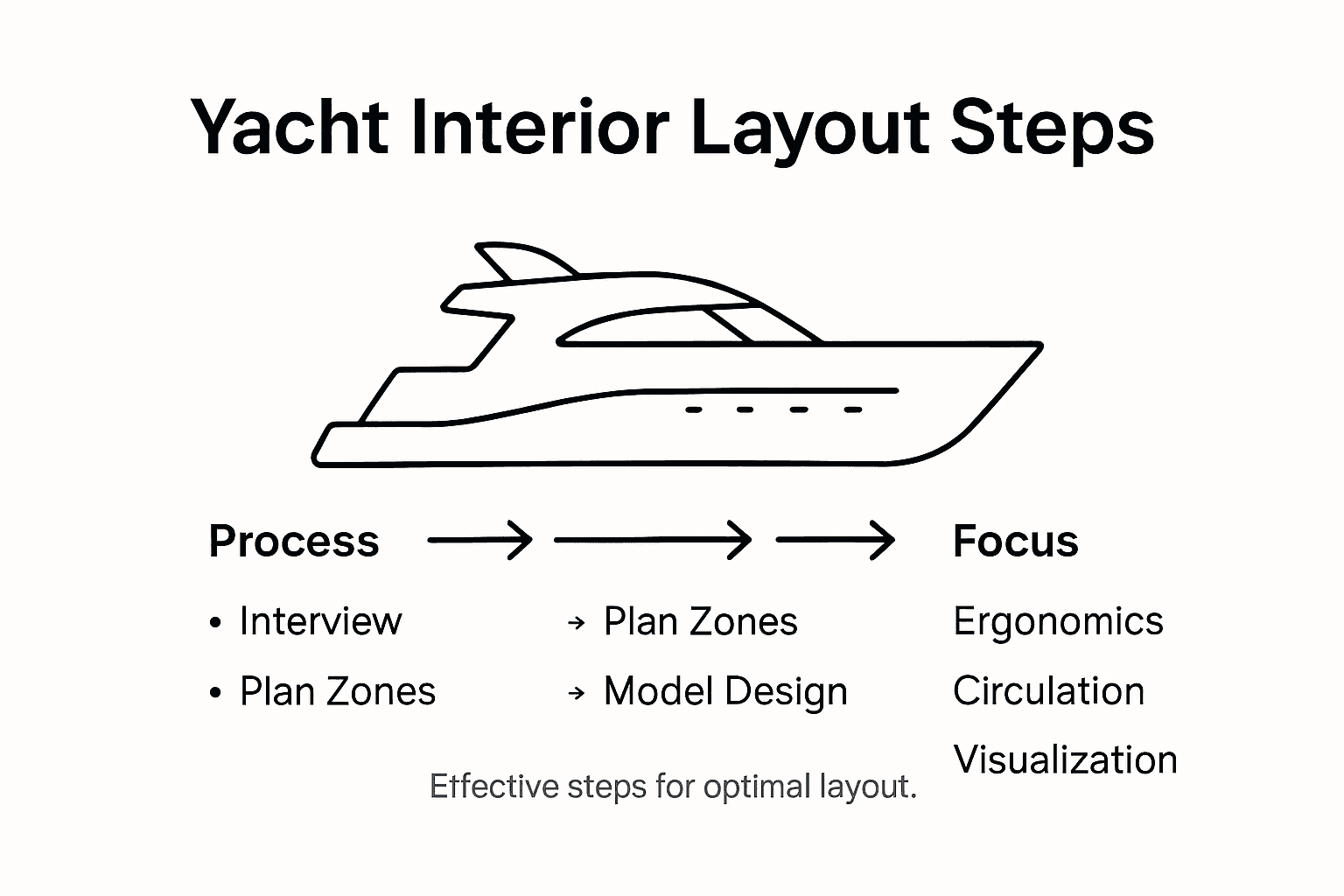
Maritime ergonomics focuses on optimizing yacht interiors to enhance natural circulation and spatial efficiency without sacrificing style. This means carefully analyzing every potential pathway and transition point within the vessel. Implement smart design strategies like integrating multifunctional furniture and concealed storage solutions that maximize usable space while maintaining clean visual lines. Consider how crew and guests will naturally move through different zones and create corridors that feel spacious and comfortable even in constrained maritime environments.
Designers craft ergonomic pathways that respect safety and functionality, incorporating open plan concepts where appropriate. Pay special attention to sight lines and psychological flow between spaces. This involves creating visual connections that make the interior feel expansive and interconnected while maintaining distinct functional zones. Strategically position key areas to minimize unnecessary movement and optimize the overall onboard experience.
Pro tip: Use painter’s tape on full scale mock floor plans to physically walk through and test proposed circulation routes before finalizing digital designs.
Step 5: Validate Outcomes Through Visualization and Review
The final stage of yacht interior layout planning requires comprehensive validation to ensure your design meets both aesthetic and functional expectations. Your objective is to critically assess every aspect of the proposed layout through multiple visualization and review techniques.
Utilize advanced rendering technologies to create photorealistic representations of your design. Modern yacht styling embraces innovative visualization techniques that allow stakeholders to experience the proposed interior before physical construction begins. Generate multiple render perspectives that showcase different lighting conditions, times of day, and usage scenarios. This approach enables a comprehensive understanding of how spaces will feel and function in real world conditions.
Interior styling plays a crucial role in communicating design intent through detailed visual representations. Conduct thorough design reviews with key stakeholders including the owner, project manager, and technical team. Encourage collaborative feedback by presenting interactive 3D models that allow participants to virtually walk through the proposed layout. Pay special attention to circulation patterns, spatial relationships, and potential areas of friction or inefficiency. Systematically document and address every observation to refine the design iteratively.
Pro tip: Schedule virtual reality walkthrough sessions that allow stakeholders to experience the yacht interior design in an immersive environment, capturing nuanced feedback impossible through traditional 2D presentations.
Elevate Your Yacht Interior Layout Planning with Expert Design and Innovation
Optimizing interior layout for yachts demands precision in spatial planning, ergonomic flow, and advanced visualization techniques—all essential goals highlighted in “Optimize Interior Layout Planning Workflow for Yachts.” If you face challenges transforming owner lifestyle preferences into seamless, functional, and luxurious living spaces that maximize circulation and adaptability, our expert team at Opalin ski Design House offers the ideal solution. We specialize in turning complex interior requirements into innovative designs using cutting-edge digital tools and patented technologies that enhance both form and function on the water.
Discover how our bespoke approach to yacht interior styling and naval architecture can streamline your design process and bring your vision to life. Visit Opalin ski Design House to explore our portfolio and industry-changing solutions like the fold-down bulkhead transom. Take the first step toward a truly optimized and sophisticated yacht experience by contacting us today for a personalized consultation. Unlock the full potential of your yacht’s layout with design experts who understand the delicate balance between luxury, function, and innovation.
Frequently Asked Questions
How do I assess owner preferences for yacht interior design?
To assess owner preferences, conduct an in-depth consultation focusing on their lifestyle and how they intend to use the yacht. Create a detailed lifestyle questionnaire to capture their entertainment style, family dynamics, and aesthetic preferences within the first meeting.
What are the key spatial zones to consider in yacht interior layout planning?
Key spatial zones include guest cabins, crew quarters, salons, galleys, and recreational areas. Prioritize defining these zones to support both functionality and the owner’s lifestyle, ensuring smooth transitions between public and private spaces.
How can I use digital tools to develop yacht interior layout concepts?
Utilize advanced 3D modeling software to create detailed digital mockups of the yacht’s interior. This allows for precise visualization of spatial zones and easy modifications based on owner feedback, enhancing the design process.
What strategies can I implement to optimize circulation in my yacht design?
To optimize circulation, analyze pathways within the yacht and create spacious corridors that allow for easy movement. Incorporate multi-functional furniture and strategically position key areas to minimize unnecessary movement and enhance overall spatial efficiency.
How can I validate my yacht interior design before construction?
Validate your yacht interior design by using advanced rendering technologies to create photorealistic visualizations. Organize collaborative design reviews with stakeholders to gather feedback on circulation patterns and spatial relationships, ensuring that all concerns are addressed before moving forward.
Recommended
Comments